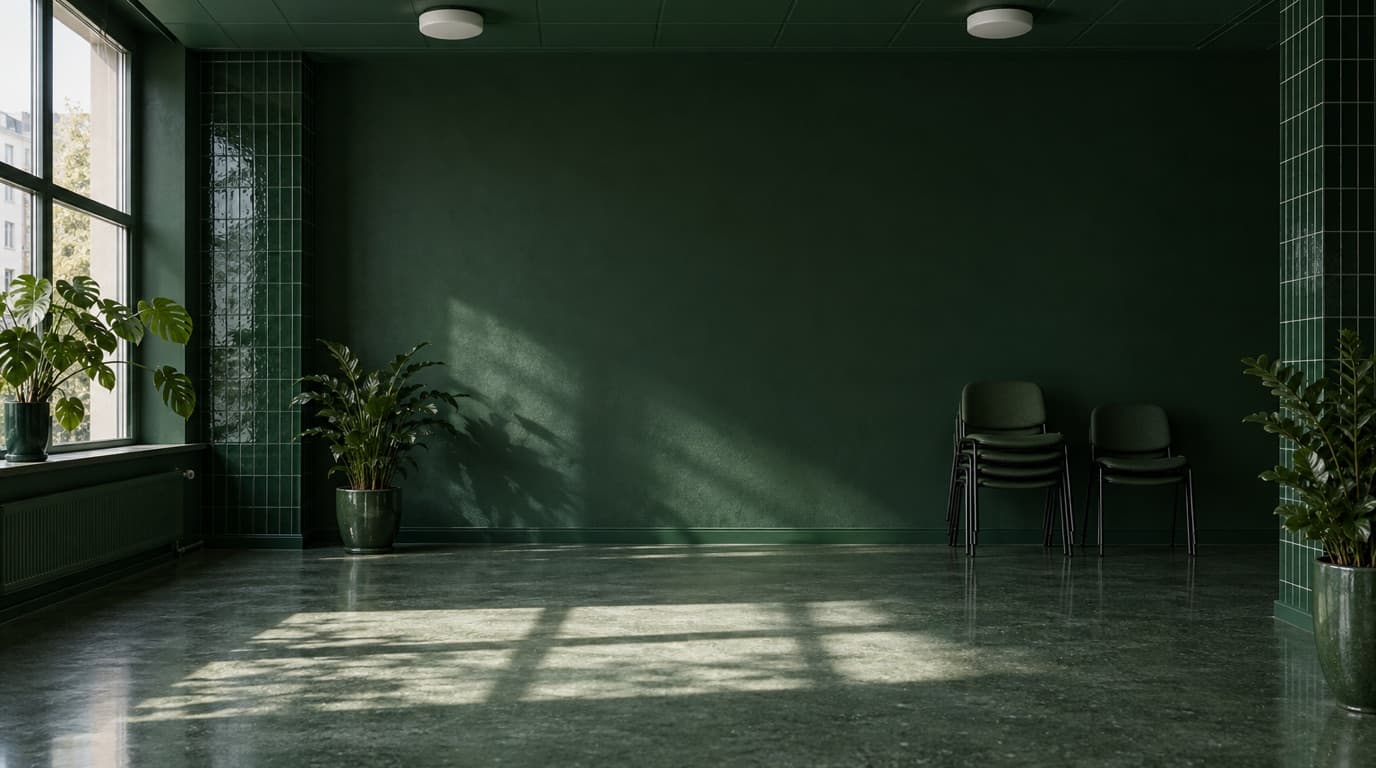
Empty offices have become one of the property sector's biggest sustainability issues. That means both vacant offices that nobody rents and leased space that stands half empty most of the week. Both are heated, ventilated and lit, and both tie up resources that could be used better. Here we look at how large office vacancies are in Sweden, why they matter for the climate and what you as a tenant can do to avoid paying for empty square metres.
How many offices are empty?
Office vacancies in Sweden have risen in recent years, especially outside the most central locations. Some figures from Stockholm:
- According to the analysis firm Citymark, the office vacancy rate in inner-city Stockholm rose from 10.3 percent in autumn 2025 to 11.1 percent in spring 2026 (Placera, April 2026, in Swedish).
- The differences between suburban submarkets are large. Citymark reports 23.1 percent vacancy in Stockholm's northern submarket and 13.8 percent in the southern one.
- In 2025 around 460,000 square metres of office space was let in Stockholm across roughly 830 leases. That was 20 percent fewer square metres than the year before but more leases: more, smaller offices.
- According to Citymark, large offices over 2,000 square metres averaged more than 40 percent of annual letting volume over the past decade, but only just over 20 percent in 2025.
The figures show a pattern many tenants recognise: companies move to smaller, better premises, often centrally, while older offices in weaker locations are left behind. More on the market in our article on the Swedish office market.
Two kinds of empty office
It is easy to talk only about vacancy rates, but there are two different problems:
| Vacant offices | Underused offices | |
|---|---|---|
| What it is | Space nobody rents | Leased space that is used little |
| Shows up in statistics | Yes, as vacancy rate | No |
| Who pays | The property owner | The tenant |
| Common cause | Wrong location, dated standard, too-large units | Hybrid work, office sized for everyone on site at once |
The second category is often bigger than people think. Many offices were sized for everyone to be in at the same time, but with hybrid work occupancy on a normal day is much lower. The space is leased and not counted as vacant, yet it stands empty for much of the week.
Why empty offices are a sustainability issue
The sustainability debate in property has long focused on energy-efficient buildings, certifications such as Miljöbyggnad and BREEAM and low-carbon materials. That matters, but a certified office does less good if large parts of it stand empty.
- Running costs without benefit. Empty space is often still heated, cooled and ventilated, at least partly. Energy per person actually using the space becomes high.
- Construction has a climate cost. New offices mean large emissions from materials such as concrete and steel. Every square metre used better reduces the need to build new.
- Refits. When tenants move, interiors are often stripped and rebuilt. Shorter and more considered fit-outs reduce waste.
In short: the most sustainable square metre is the one that gets used, and the second most sustainable is the one you do not need to rent.
What tenants can do
As a tenant you can influence a lot, and it often saves money at the same time.
Measure how you actually use the office
Count how many people are in on different weekdays over a few weeks, and how often meeting rooms are used. It does not need to be sophisticated: a simple headcount or data from the booking system goes a long way. How to turn that into the right size is covered in our guide to office space per employee.
Choose the right size at your next move
Plan for a normal day, not the peak day. Cover peaks with more meeting rooms and flexible space rather than more fixed desks. A smaller office in a better location often means both lower cost and higher attendance.
Share or sublet surplus space
If you have more space than you need during the lease term, you can share the office with another company or sublet part of it. Subletting commercial premises normally requires the landlord's consent under chapter 12 of the Swedish Land Code (jordabalken), so talk to your landlord first. How sharing works in practice is covered in our article on sharing an office.
Think flexibly
Flexible offices and business centres let you scale up and down without being stuck in too much space. That suits companies that grow quickly or are unsure of their needs. The comparison is in our article on flexible versus traditional offices.
What property owners do
Property owners are working on the issue too. Common measures are splitting large floors into smaller units, offering flexible leases and shared meeting and service spaces, upgrading older offices to a standard tenants want and in some cases converting offices to other uses, such as housing or hotels. Conversions are often complicated and require new building permits, but they can be better than leaving space empty for years.
The office as a meeting place
At the same time, the view of what an office is for is changing. For many companies it is no longer about a fixed desk for every employee, but about spaces for collaboration, meetings and community. That requires premises that can be scaled, shared and rebuilt as needs change.
The most attractive offices ahead will probably not just be the most central or modern, but the ones that are used most intelligently. Sustainability is not only about building new things the right way, but also about using what already exists much better.
Frequently asked questions
What is the office vacancy rate in Stockholm?
According to Citymark, the office vacancy rate in inner-city Stockholm was 11.1 percent in spring 2026, up from 10.3 percent in autumn 2025. In some suburban areas it is much higher, for example just over 23 percent in the northern submarket.
Why are so many offices empty?
Mainly because of hybrid work, companies looking for smaller and more central offices, and older offices in weaker locations struggling to compete. A weaker economy has also reduced demand.
Can we sublet our office?
Subletting commercial premises normally requires the landlord's consent. Check what your lease says and talk to the landlord before doing anything.
How do we know if our office is too big?
Measure occupancy for a few weeks. If a large share of desks are empty even on the busiest days, you probably have too much space, and it may be time to rethink your next lease or share the space.
Want to move to an office that fits how you actually work? Tell us what you need and we will match you with the right office within 24 hours.